

 2


|


|
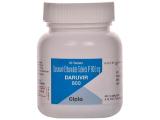
Darunavir is an oral antiretroviral medication used to treat HIV-1 infection by inhibiting the protease enzyme, preventing the virus from multiplying and reducing viral load.
|

|
600mg
60pills |

|
$791.99
$659.99 $11.00 per pill |
+ Free standard airmail service + Package delivery insurance + Next orders 10% discount |
ADD TO CART save: $0.00 |
|
|
+ Free standard airmail service + Package delivery insurance + Next orders 10% discount |
|||||
|
800mg
30pills |
|
$899.99
$749.99 $25.00 per pill |
+ Free standard airmail service + Package delivery insurance + Next orders 10% discount |
ADD TO CART save: $0.00 |
|
|
+ Free standard airmail service + Package delivery insurance + Next orders 10% discount |
|||||

October
 |
|
Delivery period 14-21 days |
14.95$ | Tracking# available in 4 days |
 |
|
Delivery period 9-14 days |
30$ | Tracking# available in 2 days |
Common use
Darunavir is a powerful antiretroviral protease inhibitor prescribed for the treatment of HIV-1 infection in adults and pediatric patients. When you buy Darunavir online, you are obtaining a medication that works by selectively blocking HIV protease, an enzyme essential for cleaving viral polyproteins during the replication cycle. By inhibiting this critical step, Darunavir prevents the formation of mature, infectious viral particles, helping to significantly reduce viral load and restore immune function. It is always used as part of combination antiretroviral therapy (cART), typically alongside other HIV medications such as NRTIs or integrase inhibitors, to achieve sustained virological suppression and improve long-term health outcomes in people living with HIV.
Dosage and direction
Darunavir tablets are taken orally, typically once or twice daily depending on the treatment regimen, and must always be taken with food to ensure optimal absorption. The recommended dosage varies based on prior treatment experience, resistance testing results, and the patient's kidney or liver function. Darunavir is routinely co-administered with a pharmacokinetic booster such as ritonavir or cobicistat, which inhibits CYP3A4 metabolism and significantly increases Darunavir plasma concentrations. Swallow tablets whole with a full glass of water; do not crush, break, or chew them. For treatment-naive patients, a common regimen is 800 mg once daily boosted with 100 mg ritonavir. Treatment-experienced patients may require 600 mg twice daily with ritonavir boosting. Always follow your healthcare provider's specific dosing instructions for your individual situation.
Precautions
Before starting Darunavir HIV treatment, inform your doctor about all existing medical conditions, especially liver disease (including hepatitis B or C co-infection), kidney impairment, diabetes mellitus, cardiovascular conditions, hemophilia, or any history of sulfonamide allergy, as Darunavir contains a sulfonamide moiety. Regular monitoring of liver enzymes, blood glucose, lipid panels, and kidney function is essential during therapy. Watch for early symptoms of hepatotoxicity such as jaundice, dark urine, or persistent nausea. Skin rashes, including potentially severe reactions like Stevens-Johnson syndrome, have been reported and require immediate medical evaluation. Patients should also be aware that immune reconstitution inflammatory syndrome (IRIS) may occur when starting antiretroviral therapy.
Contraindications
Do not use Darunavir if you have a known allergy to darunavir, ritonavir, cobicistat, or any inactive ingredient in the formulation. This protease inhibitor is contraindicated in patients with severe hepatic impairment and in those with a history of severe hypersensitivity reactions to other protease inhibitors, unless careful risk-benefit analysis has been performed by a qualified healthcare provider. Co-administration with drugs that are highly dependent on CYP3A4 for clearance and for which elevated plasma levels may result in serious or life-threatening events is also contraindicated.
Possible side effect
Common side effects of Darunavir antiretroviral therapy include nausea, vomiting, diarrhea, abdominal pain, headache, skin rash, and fatigue. Metabolic changes such as elevated cholesterol, triglycerides, and blood glucose levels may develop during long-term treatment. Serious adverse effects requiring immediate medical attention include hepatotoxicity (elevated liver enzymes, jaundice), severe cutaneous reactions such as Stevens-Johnson syndrome or toxic epidermal necrolysis, new or worsening kidney dysfunction, and significant changes in heart rhythm. Fat redistribution (lipodystrophy) and immune reconstitution syndrome are also possible during protease inhibitor-based HIV therapy.
Drug interaction
Darunavir is extensively metabolized by cytochrome P450 3A4 (CYP3A4) and also acts as an inhibitor of this enzyme, creating significant potential for drug interactions. Medications that must be avoided or carefully monitored include certain HMG-CoA reductase inhibitors (statins like lovastatin and simvastatin), oral anticoagulants (warfarin), antiarrhythmic agents (amiodarone, dronedarone), phosphodiesterase-5 inhibitors, ergot alkaloids, benzodiazepines (midazolam, triazolam), and other antiretroviral agents. Strong CYP3A4 inducers such as rifampin, carbamazepine, phenytoin, and St. John's Wort can substantially reduce Darunavir levels and must be avoided. Always provide your healthcare provider with a complete list of all prescription drugs, over-the-counter medications, herbal products, and dietary supplements you are taking.
Missed dose
If you miss a dose of Darunavir, take it as soon as you remember, provided it is within 6 hours of the scheduled time. If more than 6 hours have passed, skip the missed dose entirely and resume your regular dosing schedule with the next planned dose. Never take a double dose to compensate for a missed one, as this increases the risk of side effects without improving efficacy.
Overdose
In case of Darunavir overdose, symptoms may include severe nausea, vomiting, diarrhea, and potential hepatic complications. There is no specific antidote for Darunavir overdose, so treatment is primarily supportive. Seek immediate emergency medical attention if an overdose is suspected, and contact your local poison control center for guidance.
Storage
Store Darunavir tablets at controlled room temperature between 15 and 30 degrees Celsius (59-86 degrees Fahrenheit), protected from moisture, excessive heat, and direct light. Keep all tablets in their original container with the lid tightly closed and store well out of reach of children and pets. Do not use the medication past the expiration date printed on the packaging.
Disclaimer
We provide only general information about medications which does not cover all directions, possible drug integrations, or precautions. Information at the site cannot be used for self-treatment and self-diagnosis. Any specific instructions for a particular patient should be agreed with your health care adviser or doctor in charge of the case. We disclaim reliability of this information and mistakes it could contain. We are not responsible for any direct, indirect, special or other indirect damage as a result of any use of the information on this site and also for consequences of self-treatment.
